All Categories
Featured
An S Corporation passes its business income, losses, reductions, and credits to investors for federal tax purposes. In other words, the Internal Earnings Service permits an S Corp to act as a pass-through taxation entity, allowing owners to use business losses on their personal tax returns. It is comparable to a self-proprietorship because service costs can be subtracted on the owner's taxes.
Another option is to sign up a company as a C Corporation (C Corp). A C Corporation separates the owner's properties from business properties, and the owner or shareholders are taxed individually from the company. A C Corp forbids business losses from being crossed out on a personal tax return.
Protecting personal possessions is a matter that should be essential to every company owner. While individual possessions might be utilized as operating capital to start a company, there need to be defenses in place. Keeping business debts separate from personal possessions can be practical, especially when business financial obligations are managed through a service checking account.
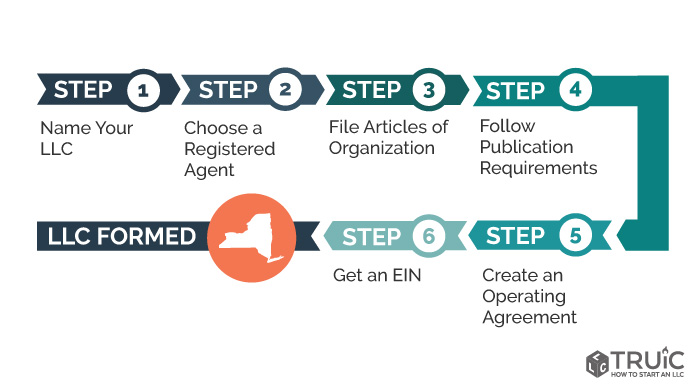
A limited liability company is another popular company entity. It provides some liability defense, has a flexible management structure, and is a pass-through tax entity. Minimal liability companies may include a single-member LLC or numerous LLC member-owners. Establishing a limited liability business usually involves an LLC operating arrangement, legal documents, and other documentation to get business began.
An LLC does not have shares like a corporation does, however in a S Corp, various owners have actually shares designated to them that determine the quantity of the business that each specific owns. When an LLC is established as a restricted liability collaboration, the question of just how much everyone owns within the LLC is identified by a partnership contract.
Why Start An LLC in 2026?
A foreign LLC carries out company in a different state than where it was developed. The term might be deceptive since a foreign LLC does not refer to a company based in a foreign country. The procedure for how to form an LLC might vary by state. Some states, however not all, need that an operating arrangement be prepared to establish the company entity.
Double tax does not occur since the company itself does not pay taxes as an LLC. To form an LLC is not a complicated procedure. The steps consist of: Selecting an organization namePaying a filing feeCompleting files to make sure minimal liability protectionHiring an attorneyObtaining a business licenseHiring a registered representative Before any LLC documents is completed, a business name should be selected.
Business name need to be creative and attract consumers. Lot of times, business name listed on a company license reflects the company's items or the services. Market research study can help with establishing a strong service name. Preferably, an effective name should stand out among competitors, be distinct, and need to not be already in use.
By supplying minimal liability defense, individual direct exposure to financial risk is based solely on the quantity a financier takes into a company. Liability security can help when a company owner wants to raise investment cash. People might be more going to invest their funds if they only run the risk of losing the cash they buy the business and not their other possessions.
Why An LLC Is Better Vs Other Models
Endless individual liability security is typically at the leading edge of the minds of entrepreneur. Little business owners frequently form an LLC once they establish their service plan. Given that the LLC exists independently from the owners, the owners are normally protected from being held personally responsible for the company's debts and liabilities.
Ideally, an organization owner should speak with a skilled legal representative and acquire suggestions for legal help. To form an LLC, it is essential to acquire an organization license and pay the organization license filing charge.
Finding High-Growth Market SectorsOwners also may wish to utilize a signed up representative service. A signed up agent is required to be designated by law and can be an employee, attorney, or anyone who can be depended manage essential correspondence related to the organization. By using a signed up agent service, owners can be assured that federal government, tax, and legal correspondence on behalf of the LLC is properly managed by the signed up agent.
Filing with the state's office that handles corporations will be essential, and a signed up agent can help with this procedure. The signed up agent might supervise of getting the EIN, examining to see when franchise taxes and filing costs are paid, and registering the organization entity with the IRS.

Latest Posts
Predicting Value with Machine Learning in 2026
Defining Community-Led Growth in 2026
Anticipating Consumer Behavior with Data Strategy Tools in 2026